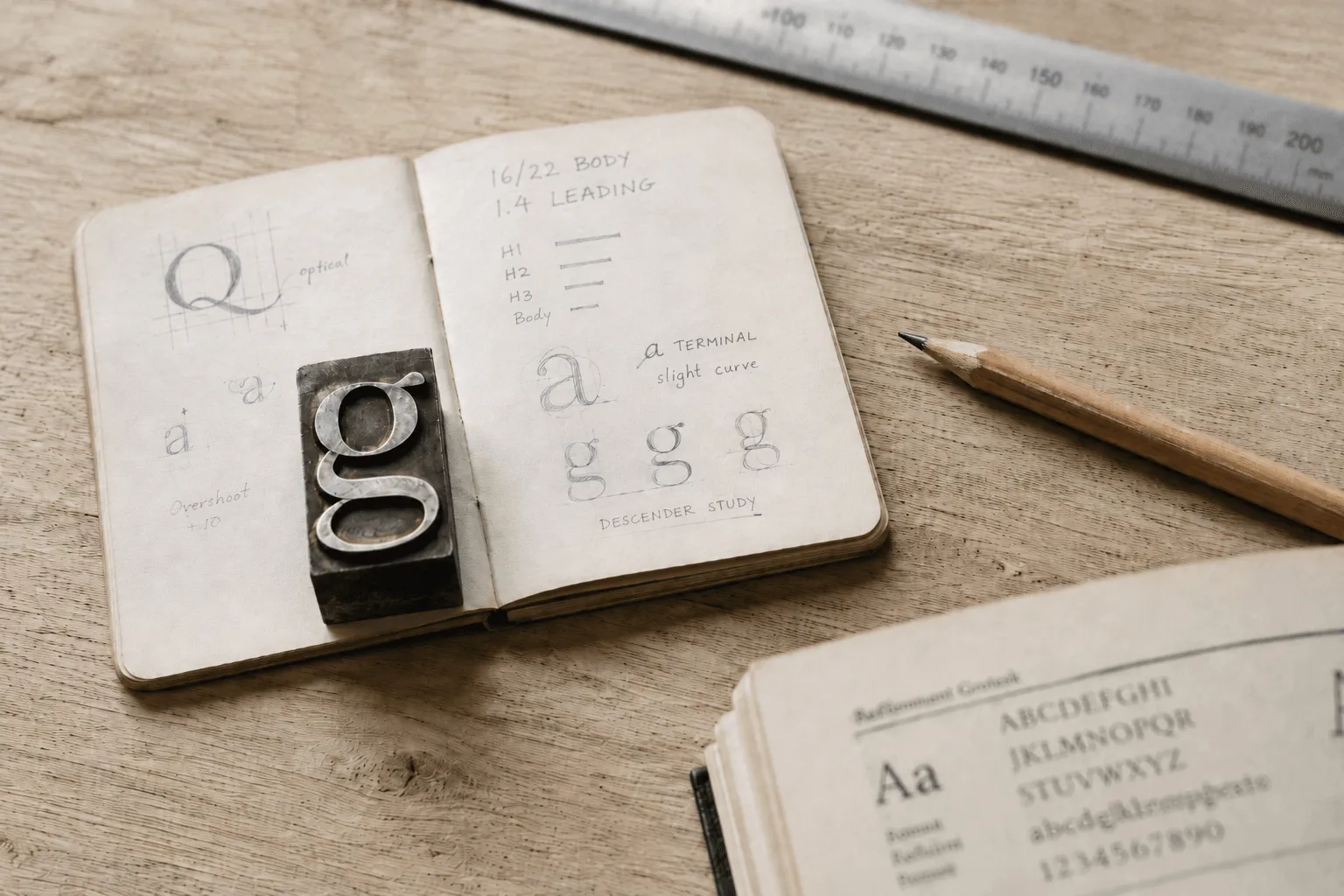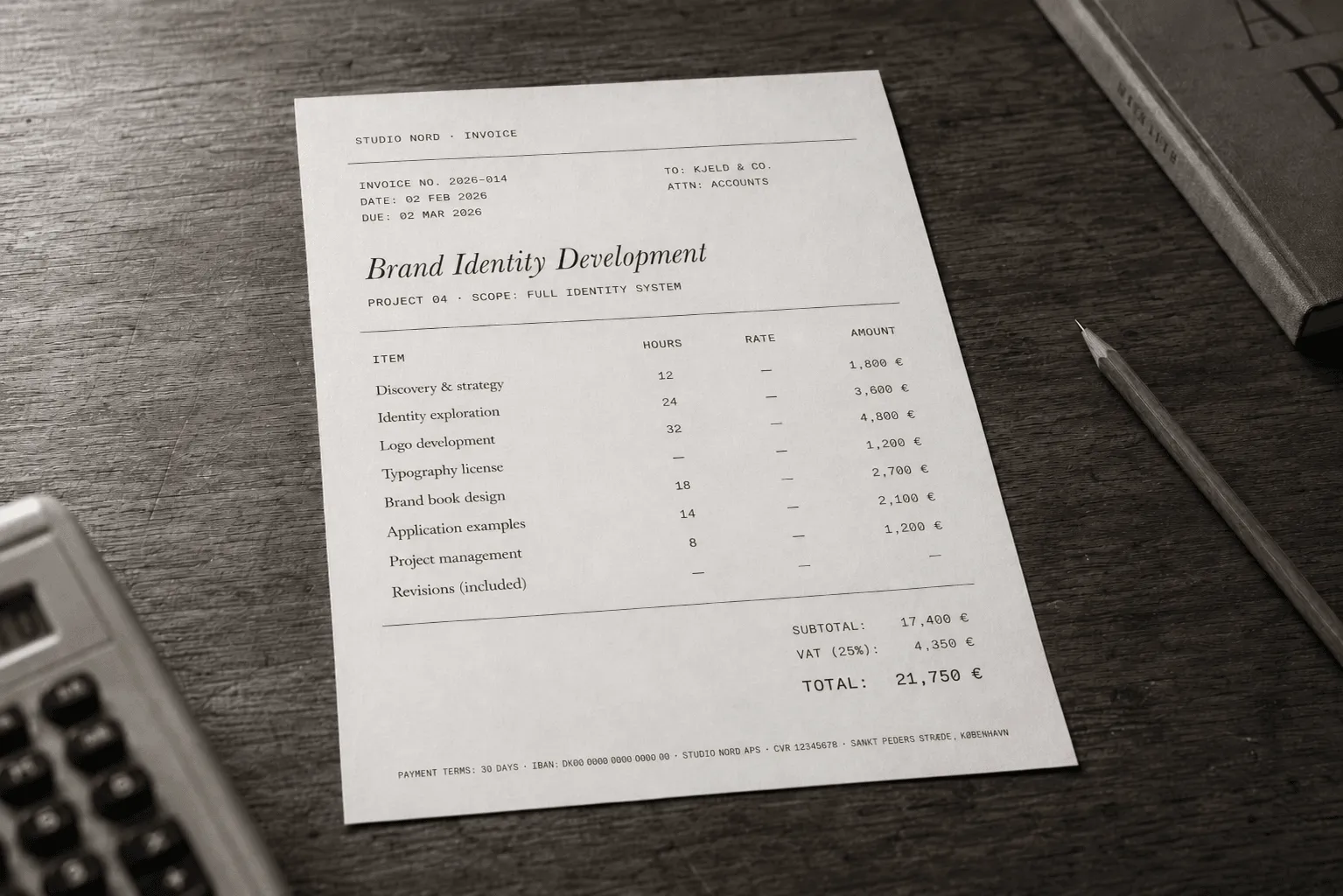
Every project at the studio starts the same way: an A3 pad, a 0.5mm pencil, and a rule that nothing drawn in the first week is allowed onto a screen. I am the developer here. I am also the one who insists on it most.
A3 layout pad, 75 g. A 0.5mm mechanical pencil, HB. A steel ruler we mostly ignore. A bin under the desk that is emptied every Friday whether it needs it or not.
Precision too early
A design tool rewards precision from the first click. Every box snaps to a grid, every colour is a token, every frame can be duplicated, renamed, and filed. That is exactly what you want in week four. In week one it is a trap: the moment a layout looks finished, the team starts defending it instead of questioning it.
A pencil sketch never looks finished. Nobody argues about the spacing in a drawing where the headline is a wavy line. The conversation stays where it should be — what goes on this page, in what order, and why anyone would scroll past the first screen.
“A wireframe you can throw away in two seconds is a wireframe you can be honest about.”
The trash can is a tool
We draw fast and we throw most of it away. A typical homepage goes through twenty or thirty sketches before one survives the week, and most of those take under a minute. On paper, discarding an idea costs nothing. On a screen it costs a frame, a name, a version, and a small reluctance to delete something that took effort.
The surviving sketches go up on the studio wall in a row. We walk the row with the client on the first review call, camera pointed at the wall. It is the least polished presentation we give, and usually the most useful one.
If you can’t sketch the page in under a minute, you don’t know what the page is for yet. Go back to the brief, not to the grid.
Why the developer cares
Hand sketches make me a better builder. When a layout arrives as a drawing, I read it for structure — what is a list, what repeats, what is the one component that only appears once. By the time the high-fidelity design exists, the content model and the component list are already written, and they rarely change.
Figma comes in during week two, and from then on it is the only source of truth. We are not nostalgic about paper. We just think the first week of a project deserves a tool that is allowed to be wrong.